

When Daniel Lopatin announced his eleventh studio album under the Oneohtrix Point Never (OPN) moniker, the electronic music world braced for another pivot. After the pop-maximalism of Magic Oneohtrix Point Never (2020) and the autobiographical "speculative fiction" of Again (2023), Lopatin has returned to the digital ether with Tranquilizer.

Tranquilizer isn’t just an album; it’s a meditation on digital ephemerality. Born from a chance discovery that a massive archive of 90s sample CDs had vanished from the Internet Archive, Lopatin used the "banal reality" of these disappearing sounds to craft a record that feels like a glowing return to his most experimental roots.
The Sound: Plunderphonics Meets "Eco-Ambient"
If R Plus Seven was crystalline and Garden of Delete was a "feverish upchuck" of synths, Tranquilizer feels like falling out of a dream you can still touch. Critics have widely noted that the album bridges the gap between his Replica-era plunderphonics and his more recent, high-fidelity production.
The sound palette is heavily "rompled"—a nod to the ROM sampling of the 90s. Tracks like "Lifeworld" evoke the nostalgia of a PS1-era select screen, blending tribal drum loops with New Age exotica. Meanwhile, "Bumpy" creates what The Needle Drop described as an "intergalactic clock" atmosphere, where samples stutter and buffer like a corrupted video file, only to evaporate into a "cosmic stew of rhythm."
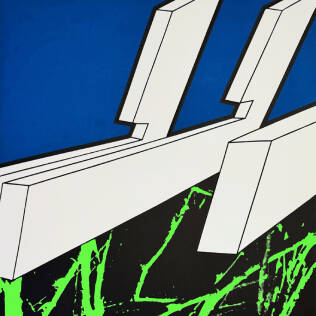
Key Highlights
-
"Measuring Ruins": Already a fan favorite, this track is being hailed as one of Lopatin’s most ethereal compositions to date, leaning into the "New Age" re-evaluation that has defined recent ambient music.
-
"Rodl Glide": Perhaps the album’s biggest surprise, this track starts as a laid-back, trip-hop "slow jam" before pivoting into a glitchy, garage-rave beat that showcases OPN’s ability to "slay" at future garage.
-
"D.I.S.": A standout for its "hyper-focus" and arcade-mode energy, this track features space-age choruses that disintegrate in real-time, ending in a hauntingly calm piano arpeggio.
-
"Waterfalls": The closing track is a lush, harpsichord-led finale that many reviewers have called "ear candy," providing a heavenly conclusion to an otherwise slippery and subversive journey.
Add comment
Comments